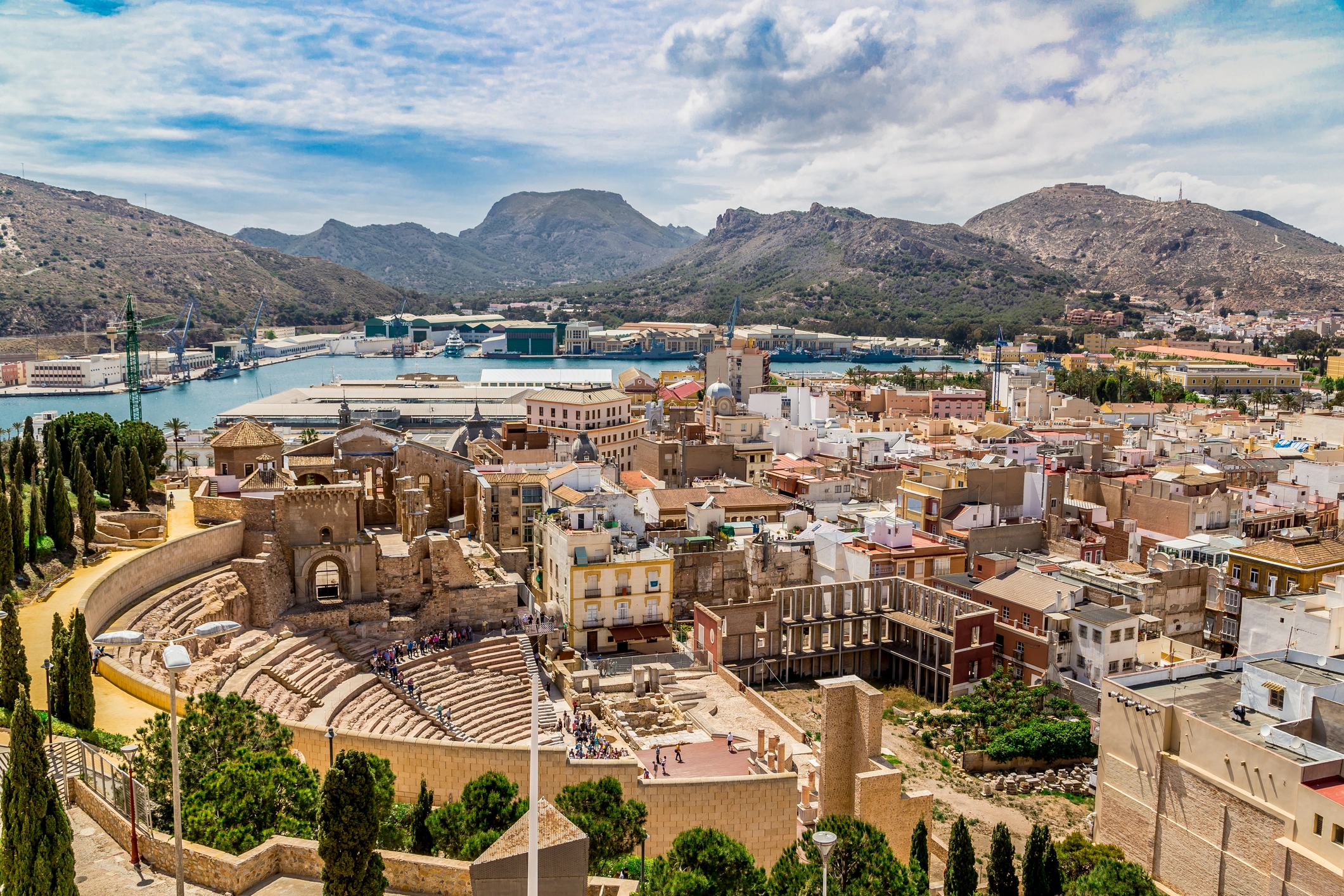
Cartagena is a Spanish city and a majornaval station located in the Region of Murcia, by the Mediterranean coast, south-eastern Spain. The metropolitan area of Cartagena, known as Campo de Cartagena, has a population of 409,586 inhabitants.
Cartagena has been inhabited for over two millennia, being founded around 227 BC by the Carthaginian Hasdrubal the Fair as Qart Hadasht, the same name as the original city of Carthage. Much of the historical weight of Cartagena in the past goes to its coveted defensive port, one of the most important in the western Mediterranean. As far back as the 16th century it was one of the most important naval ports in Spain, together with Ferrol in the North. It is still an important naval seaport, the main military haven of Spain, and is home to a large naval shipyard.
The confluence of civilizations as well as its strategic harbour, together with the rise of the local mining industry is manifested by a unique artistic heritage, with a number of landmarks such as the Roman Theatre, the second largest of the Iberian Peninsulaafter the one in Mérida, an abundance of Phoenician, Roman, Byzantine and Moorish remains, and a plethora of Art Nouveaubuildings, a result of the bourgeoisie from the early 20th century. Cartagena is now established as a major cruise ship destination in the Mediterranean and an emerging cultural focus.
It is the first of a number of cities that eventually have been named Cartagena, most notably Cartagena de Indias (Cartagena of the Indies) in Colombia.


