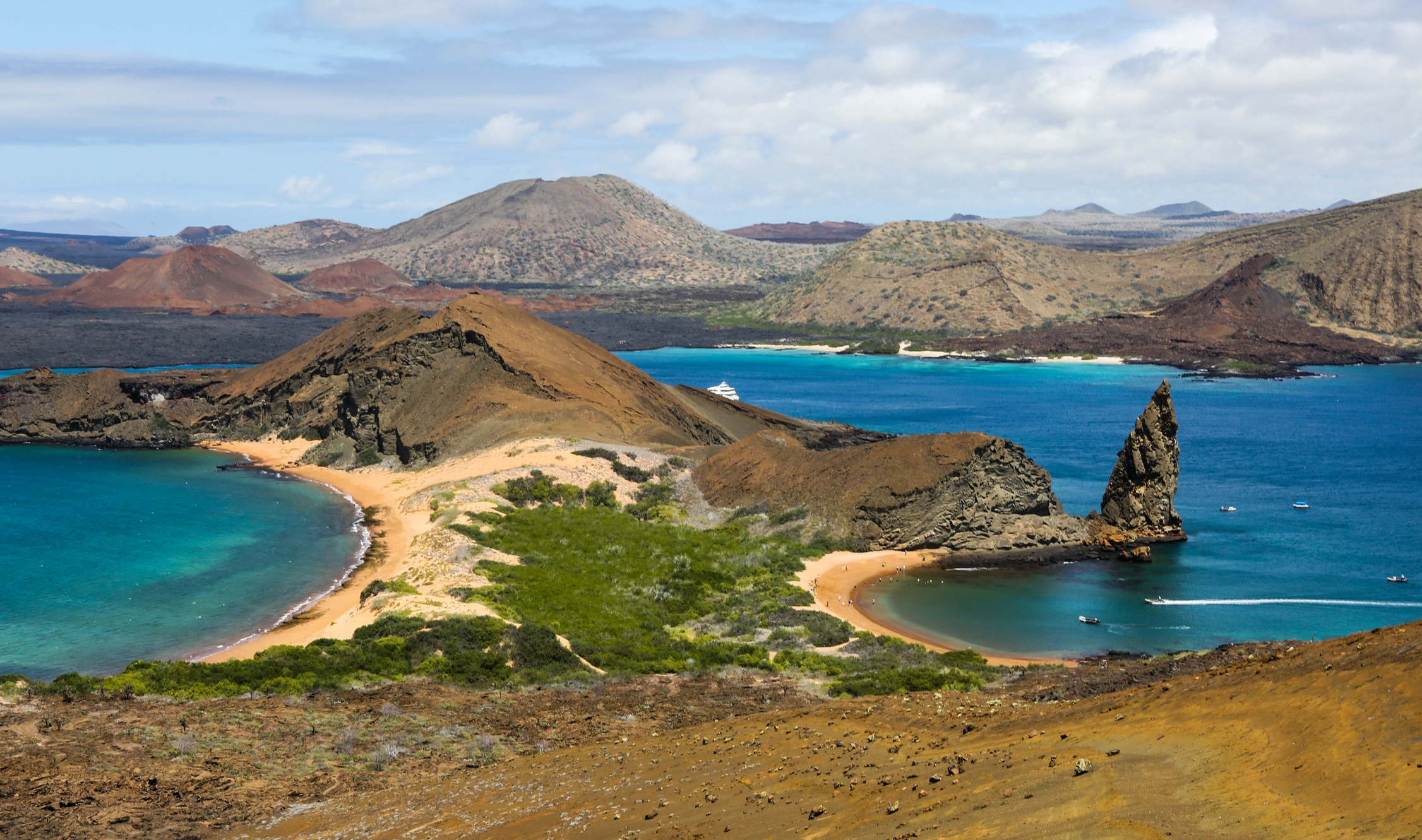
The Galápagos Islands are an archipelago of volcanic islands distributed around the equator in the Pacific Ocean, 525 miles west of continental Ecuador, of which they are a part. Wildlife is its most notable feature. The Galápagos islands and its surrounding waters form an Ecuadorian province, a national park, and a biological marine reserve. The principal language on the islands is Spanish. The islands have a population of around 23,000. The islands are geologically young and famed for their vast number of endemic species, which were studied by Charles Darwin during the voyage of the Beagle. His observations and collections contributed to the inception of Darwin's theory of evolution by natural selection.
Galapagos Islands